Why Design Systems Matter More Than Ever
A look at how design systems reduce friction, speed up delivery, and keep products consistent at scale.
Design systems have evolved from nice-to-have pattern libraries into critical infrastructure for product teams. Here's why they matter more than ever.
The consistency problem
Every product team faces the same challenge: as the team grows, so does inconsistency. Button styles drift. Spacing becomes arbitrary. Color usage fragments across surfaces.
A design system solves this by establishing a single source of truth — a shared vocabulary of components, tokens, and patterns that everyone references.
Speed, not just consistency
The real value isn't just visual consistency. It's velocity. When designers and developers share a component library:
- Designers spend less time redrawing standard UI
- Developers stop re-implementing the same patterns
- Reviews focus on logic and UX, not "is this the right shade of blue?"
What a good design system looks like
The best systems I've worked with share a few traits:
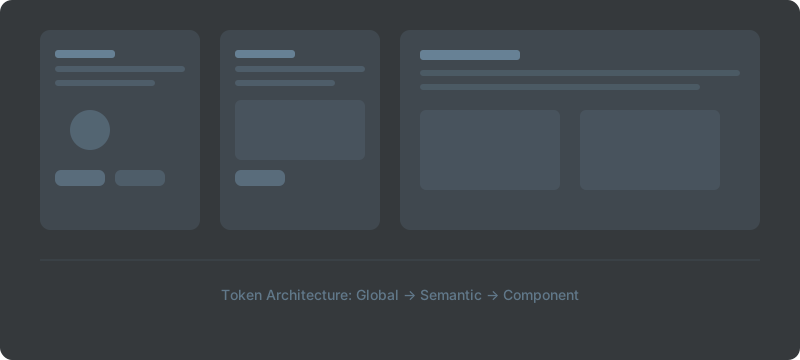
- Tokens first — colors, spacing, and typography defined as variables, not hardcoded values
- Composable components — small primitives that combine into complex UI
- Documentation that stays current — if the docs lag behind the code, trust erodes fast
- Governance without gatekeeping — contribution guidelines that welcome input
Start small
You don't need a 200-component library on day one. Start with buttons, inputs, and typography. Add components as you find yourself rebuilding them. The system grows with the product.
The best design system is the one your team actually uses.